If you sell to customers outside your home country, you already know the uncomfortable truth: Getting paid isn’t as easy as it sounds. A customer in Germany wants to pay in EUR. Someone in Tokyo is keen to try a local payment method you don’t even know about. And your finance team just asked where 4% of every transaction is going because no one is quite sure what those “fees” are.
Welcome to the real challenge of running a global business: how to take international payments without losing money, customers or your sanity in the process.
But the good news? “This problem is a lot easier to solve today. Let’s talk about what actually works.
Why it is more difficult than it looks
On paper it is a simple concept to get money from another country. What you’re really looking at is currency conversion, cross-border banking rules, fraud risk, local payment preferences, and stacking fees like a bad game of Jenga.
In Brazil, a customer may not have a credit card but uses Pix all the time. A shopper in the Netherlands prefers iDEAL to Visa. If your checkout page only accepts one currency and one card network, you’re losing sales every day and don’t even realize it. You can’t see the customers who left.
So the goal isn’t just to technically receive international payments. The way to do it is to do it in a way that feels local and trustworthy to the person paying you and is simple and cost effective for you.
Multi currency payment gateways
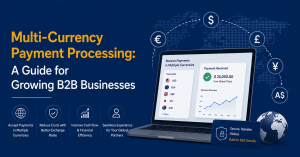
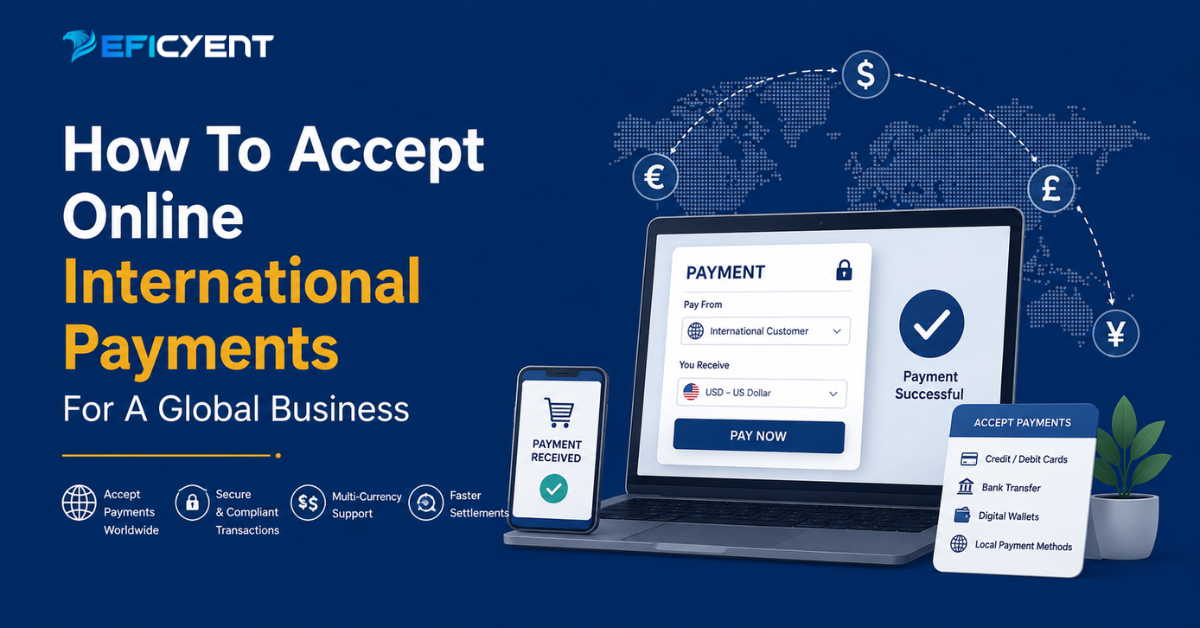
This is often the first upgrade companies make. With a multi-currency gateway, you can display prices and accept payments in your customer’s local currency, even if your business account pays out in USD, GBP or whatever you use at home.
Providers like EFICYENT offer this to varying degrees. The customer sees the price in their own currency, pays using a method they are familiar with and you get the money converted (or held) according to your settings.
The real benefit here is not convenience, it’s conversion rate. Cross-border research repeatedly shows that shoppers are far more likely to purchase when they see the price in their own currency, rather than in a foreign currency they need to mentally convert.
Not just cards, local payment methods
“If you only accept Visa and Mastercard, you’re shutting out a huge part of the world. The use of cards varies greatly by region:
- Europe: SEPA transfer, iDEAL (Netherlands), Klarna, giropay
- Asia: Alipay, WeChat Pay, GrabPay, UPI (India)
- Latin America: Pix (Brazil), OXXO (Mexico)
- Africa: M-Pesa and other mobile money services
Just including two or three of the most relevant local methods for your target markets can lead to a significant increase in the number of international customers who actually checkout. This is just as critical for one-off ecommerce sales as it is for companies trying to receive international payments from existing clients or subscribers.
Digital wallets and multi-currency accounts
If you run a business that regularly works with international clients (say a freelancer, an agency, a SaaS business or a consultant) then a multi-currency business account is often a better option than a traditional payment gateway.
Companies like EFICYENT provide services that let you hold balances in multiple currencies and receive payments as if you had a local bank account in that country. For example, a French client can pay a US-based freelancer in euros, and neither party has to deal with a cumbersome international wire transfer.
This method is usually cheaper than normal bank transfers especially for small or regular payments and the settlement is normally quicker too.
Traditional International Wire Transfers (SWIFT)
Still good. Particularly in large B2B deals. SWIFT transfers are generally reliable and well-trusted, but there are downsides: higher fees, slower settlement (sometimes 3-5 business days), and less transparency on exchange rates as banks often add a markup that you don’t see up front.
But if you are signing big deals with overseas businesses, SWIFT is still a way for you. Just don’t rely on it for your day-to-day transactions fees and delays can add up quickly.
Accept Cryptocurrency Payments
Still a small slice of the pie, but growing, particularly for businesses in sectors where traditional banking rails are slow, expensive or restricted. You get paid in stablecoins like USDC almost instantly for international payments without the hassle of currency conversion.
It’s not right for every business and the regulatory environment isn’t the same in every country but it’s good to know the option is there, especially if you have customers in parts of the world where local currencies are volatile or banking facilities are limited.
What Matters When Choosing a Method
It’s helpful to cut thru the options and ask yourself a few practical questions:
Where are your customers, really? Don’t guess. Check your analytics. Build your payment stack around your top five countries, not around a hypothetical global audience.
Are you doing one time sales or recurring billing? Providers are required by subscription businesses to handle recurring international charges over time, and including retrying failed payments.
What are the fees that are hurting your margins? Currency conversion fees, cross border fees and card network fees can quietly take 3-5% off the top of every transaction. That is real money over a year, so it is worth shopping around.
Do you have to keep the money in a foreign currency or do you have to convert it in one go? Pay your suppliers or contractors in the currency you receive it in. A multi-currency balance can save you the hassle of unnecessary back and forth currency conversions.
A realistic startup
If you’re just starting to lay out your international payments strategy, a good baseline is:
- Multi-currency checkout gateway for your website
- Multi-currency business account to receive direct payments from clients
- Added one or two local payment methods for your biggest international markets
- SWIFT as a backup for large one-off deals
- Stablecoin payment option (USDC/USDT) for markets with weak banking rails or clients who prefer crypto settlement
This combination will cover most scenarios without overcomplicating your finance stack.
The Last Word
There is no “best” way to get paid internationally. It is contingent upon your business model, your customers, and how often money is crossing borders. But the international firms that are expanding the fastest are usually the ones that made it easy to pay them, in whatever currency and method their customers already trusted.
Don’t start with where you think your customers are, start with where they are, and build your payment setup around that. “The rest usually just falls into place.”