Ever wondered how a bank in London settles a dollar payment with a bank in New York without physically moving cash across the ocean? The answer usually comes down to two words: nostro and vostro. These terms are common in international banking, trade finance and treasury, but most people outside the banking world have never heard them explained in plain English.
Meaning of Nostro Account
The word “nostro” comes from Latin and simply means “ours.” A nostro account is a bank account a bank maintains in a foreign country in the currency of that country, usually with a correspondent bank.
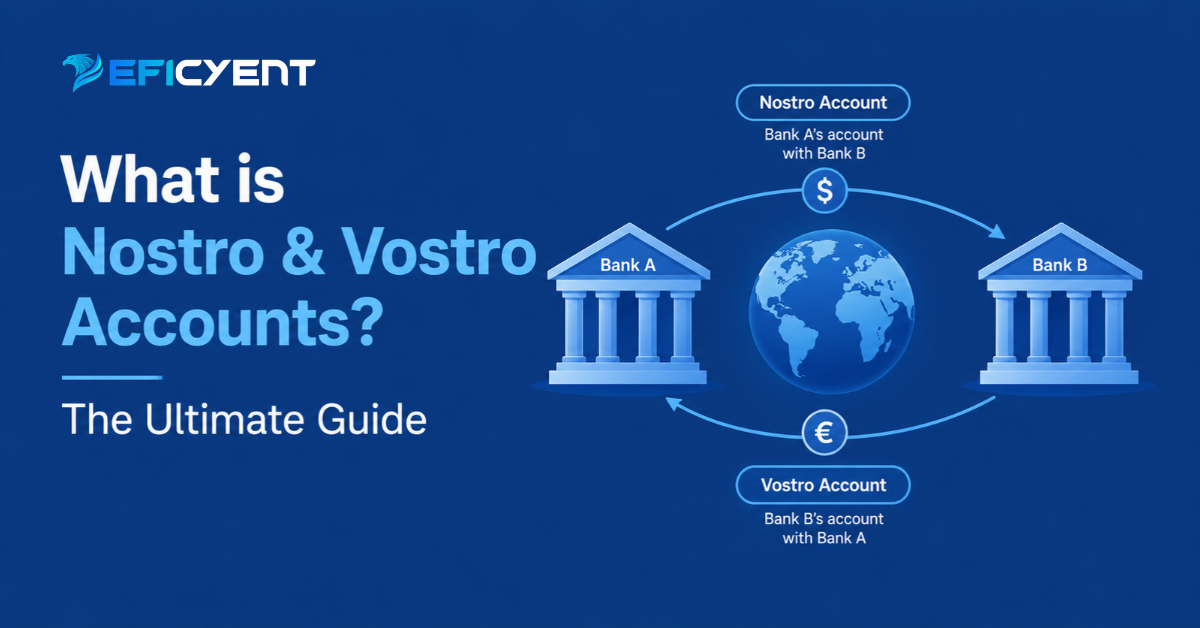
Think of it this way: Let’s say you have an HSBC Bank account in UK and you want to make a payment in USD. You can’t wire dollars out of an GBP account. It needs a real dollar account somewhere in the US banking system. So HSBC opens an account with, say, JPMorgan Chase in New York. From HSBC’s perspective, this is “our account with them”, hence nostro.
So, if someone asks you what a nostro account is, here is the short answer: it is your own bank’s foreign currency account held abroad, used to facilitate international transactions.
Now switch the point of view. “Vostro” is the Latin for “yours”.
To return to the example we were discussing, from JPMorgan Chase’s perspective, the account they are holding for HSBC Bank is not “ours” but “yours” (HSBC’s). So JPMorgan calls that same account a Vostro account.
This is the main thing people forget, a nostro and vostro account are not two different accounts sitting in two different banks. They are the same account, just known by two different perspectives. One bank calls it nostro and the other bank calls it vostro depending on who’s looking at it.
A quick way to remember nostro vostro is to think of two sides of a mirror. The account has something else called it, but it’s the same reflection, whoever’s talking.
Why Do Banks Want These Accounts, Anyway?
Cross-border payments are more cluttered than people think. In general, a bank in one country can’t just credit or debit an account in another country right away; it doesn’t have the infrastructure, regulatory access or local currency reserves to do that on its own. This is where correspondent banking relationships come in.
Banks can maintain nostro accounts in major financial centers (New York for USD, London for GBP, Frankfurt for EUR, etc.) by:
- Customer international trade payment settlements
- Handle foreign exchange trades efficiently
- Support remittance and cross border wire transfer
- Avoid the cost and risk of physically transferring currency
Without this system, every international transaction would require some form of physical currency exchange, which is just not practical at scale.
Understanding Nostro Accounts
Banks closely monitor their nostro balances of the actual money held in foreign accounts at any moment. This is not bookkeeping. It is a critical ingredient of treasury management.
A too-low nostro balance exposes the bank to penalties, delays or damage to its reputation if it cannot honor a customer’s payment instruction. If it’s too high, the bank is basically parking money that could be earning returns elsewhere, or exposing itself to unnecessary foreign exchange risk.
That’s why banks do something called nostro reconciliation, which is where they regularly match their internal records to the statements the correspondent bank sends them, so they can catch discrepancies, late entries, or unauthorized transactions early. This process is often run daily ( sometimes with dedicated software ) at large banks . Small mismatches can snowball into significant issues if left unchecked .
What is Mirror accounts
In fact, a third term is often used with these two: the mirror account, also called a “loro” account. This is basically an internal record that a bank maintains to track the vostro account that it holds for another bank, enabling real time monitoring of balances without waiting for external statements. It’s not a separate account type, but more of an internal control mechanism, so it’s good to know if you hear the term.
Summary
Nostro and vostro accounts might sound like jargon reserved for bankers, but the concept behind them is refreshingly simple once you strip away the Latin. It’s really just about perspective, the same account, described differently depending on who’s talking about it. Understanding this relationship is genuinely useful if you work in trade finance, treasury, forex, or even just want to understand how your international wire transfer actually reaches its destination behind the scenes.